When people shop for deodorant, one of the first questions they ask—often subconsciously—is simple: How long will this actually work?
For years, the answer was assumed to be “one day.” Anything beyond that sounded unrealistic.
But modern deodorants challenge this assumption, forcing a more nuanced question: how long should a deodorant last—and what does “lasting” really mean?
Why Most People Expect Deodorant to Last Only One Day
Daily deodorant use didn’t come from biology; it came from product design.
Traditional deodorants were built to work in short cycles. They delivered a quick sense of freshness but wore off within hours due to:
-
evaporation,
-
friction from clothing,
-
sweat and movement,
-
washing and showering.
Over time, people learned to expect that deodorant would need to be reapplied every morning. That expectation stuck—even as formulations evolved.
The Problem With a Fixed “24-Hour” Expectation
The human body doesn’t operate on a strict 24-hour odor schedule.
Odor development depends on:
-
activity level,
-
environment,
-
clothing,
-
duration of wear,
-
skin condition.
In many cases, odor doesn’t suddenly appear at the 24-hour mark—it develops gradually. A deodorant designed only for short-term use doesn’t address this reality very well.
What “Deodorant Longevity” Actually Means
Longevity isn’t about how strong a deodorant smells or how aggressively it masks odor. It’s about how long the product remains effective on the skin.
A deodorant that lasts longer:
-
doesn’t need constant refreshing,
-
remains present after initial application,
-
continues to support freshness over time.
This is a fundamentally different goal than “feels fresh right now.”
Typical Deodorant Lifespans (Realistic Ranges)
To understand expectations, it helps to look at common ranges:
-
Traditional daily deodorants: a few hours to one day
-
Enhanced daily formulas: up to 24 hours
-
Long-lasting deodorant creams: several days, sometimes longer
-
Extended-duration deodorants: up to multiple weeks (depending on use and individual factors)
These ranges aren’t guarantees—they reflect how products are designed to perform.
What Affects How Long Deodorant Lasts
No deodorant behaves identically for every person. Several factors influence longevity:
Activity level
High movement and friction shorten effectiveness.
Climate
Heat and humidity increase moisture and friction.
Application method
Applying to clean, dry skin matters more than most people realize.
Product format
Creams, sticks, sprays, and roll-ons behave differently over time.
Frequency of washing
Washing too soon after application can reduce longevity.
Understanding these factors helps set realistic expectations.
Why Long-Lasting Deodorants Are Different
Long-lasting deodorants aren’t just “stronger” versions of daily products. They are designed with durability in mind.
They typically:
-
use concentrated formulas,
-
rely on proper absorption rather than surface action,
-
are applied less frequently,
-
don’t assume daily reapplication.
This approach shifts deodorant from a habit into a tool you use when needed.
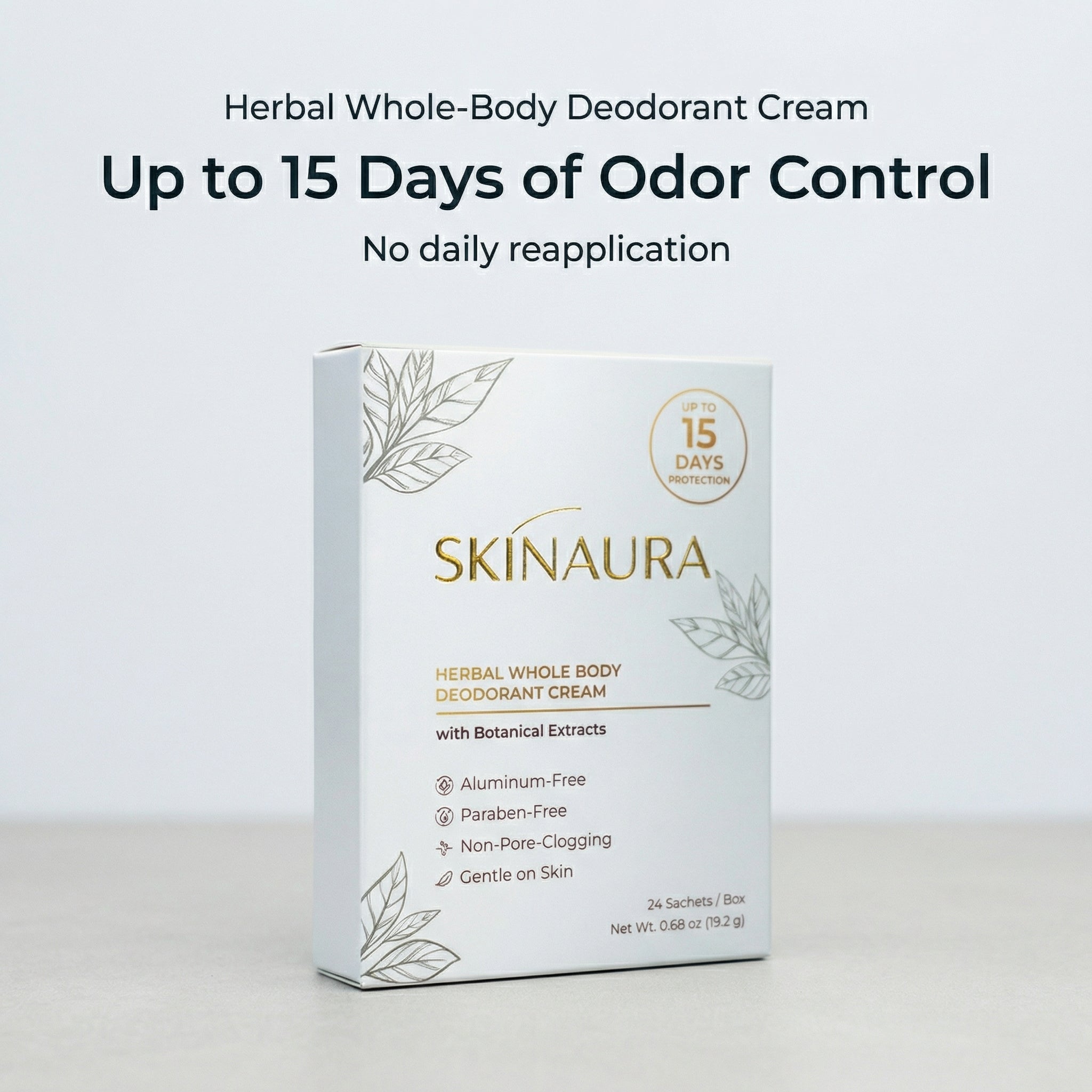
What “Up to 15 Days” Really Means
When a product says “up to 15 days,” the wording matters.
“Up to” signals:
-
maximum potential duration,
-
variability between users,
-
dependence on proper use.
It does not mean:
-
guaranteed 15 days for everyone,
-
identical results across all lifestyles,
-
zero need for awareness or reapplication.
The purpose of such wording is to communicate the upper capability of the product—not a promise.
Why Longer Doesn’t Always Mean Better
More longevity isn’t automatically better for everyone.
Some people prefer:
Others prefer:
-
fewer steps,
-
minimal maintenance,
-
flexibility.
The “right” deodorant duration depends on personal preference—not a universal rule.
How to Tell If Your Deodorant Is Still Working
Rather than watching the calendar, pay attention to:
Long-lasting deodorants are meant to fade gradually rather than stop abruptly.
The Role of Proper Application
Even the best formula won’t perform well if applied incorrectly.
Best practices include:
-
applying to clean, dry skin,
-
avoiding immediate washing,
-
using only the recommended amount,
-
allowing absorption time.
These steps significantly impact how long a deodorant remains effective.
Why Setting Realistic Expectations Matters
Unrealistic expectations lead to disappointment—even with good products.
Understanding that:
helps people evaluate products fairly and choose what fits their lifestyle.
Long-Lasting Deodorants and Modern Routines
As routines become less rigid and lifestyles more flexible, products that adapt—rather than demand daily attention—are becoming more attractive.
Long-lasting deodorants fit into this shift by reducing maintenance without sacrificing comfort.
Final Thoughts
So how long should deodorant last?
There’s no single answer. For some, a few hours is enough. For others, days or weeks make more sense.
What matters most is alignment between:
-
product design,
-
user expectations,
-
lifestyle needs.
Long-lasting deodorants expand the range of what’s possible—giving people the option to step away from daily routines and choose a more flexible approach to freshness.